

What Does a Virtual Assistant Cost? What Actually Moves the Price

What does a Virtual Assistant Cost? Why There is no Single Honest Number
Search for virtual assistant pricing and you will find confident hourly figures spanning an order of magnitude, which tells you the question is malformed rather than that the market is chaotic. A rate only means something once you know what skill it buys, how it is managed, who carries the risk, and what happens when the person is unavailable.
The useful question is what changes the price, because those variables are the ones you control. Understanding them lets you judge whether a specific quote is reasonable for the specific thing you are buying. It also helps to know how a VA compares to an in-house employee before you read any number at all.
The Five Variables that Move Virtual Assistant Pricing
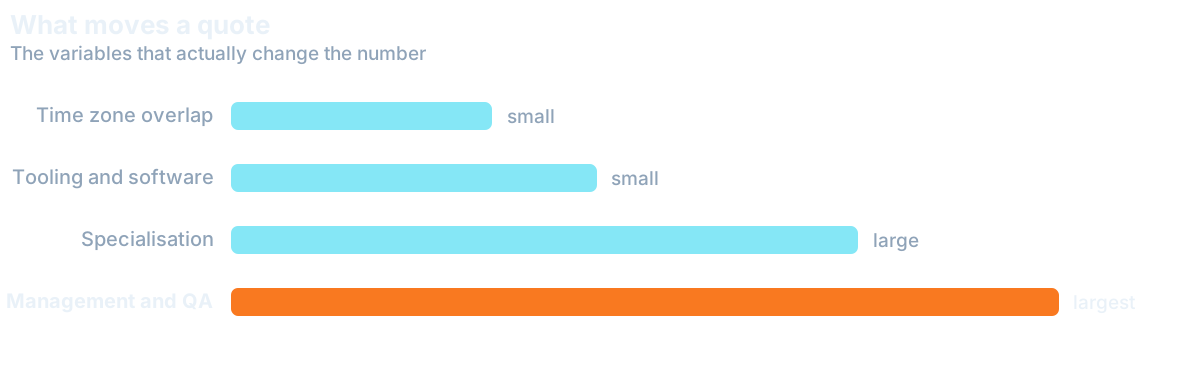
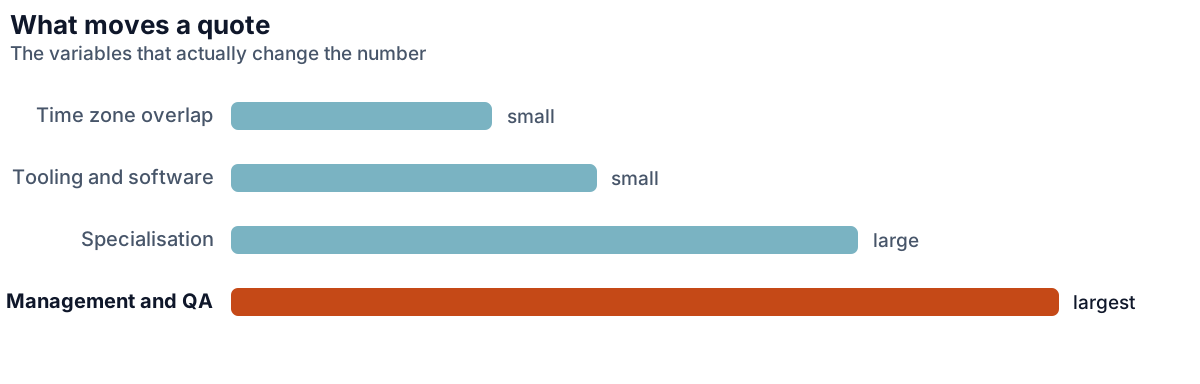
In roughly descending order of impact, these are what a serious quote is built from. Notice that only the first is about the person; the rest are about how the engagement is structured, which is where most of the variance between providers lives.
- Skill and specialisation. General admin sits at the bottom. Bookkeeping, transaction coordination and outbound sales sit meaningfully higher, because the training and the cost of an error are both larger.
- Managed or unmanaged. A managed engagement prices in recruiting, vetting, oversight, cover and replacement. Unmanaged is cheaper per hour because those costs move onto you.
- Hours and commitment. Full-time dedicated work prices differently from part-time, which prices differently from ad hoc. Predictability is worth something to both sides.
- Time-zone coverage. Working your hours rather than theirs carries a premium, and it reflects a real cost rather than a markup.
- Language and client contact. Anything client-facing raises the bar on communication, and communication is the hardest thing to train for.
What the Cheapest Virtual Assistant actually Costs
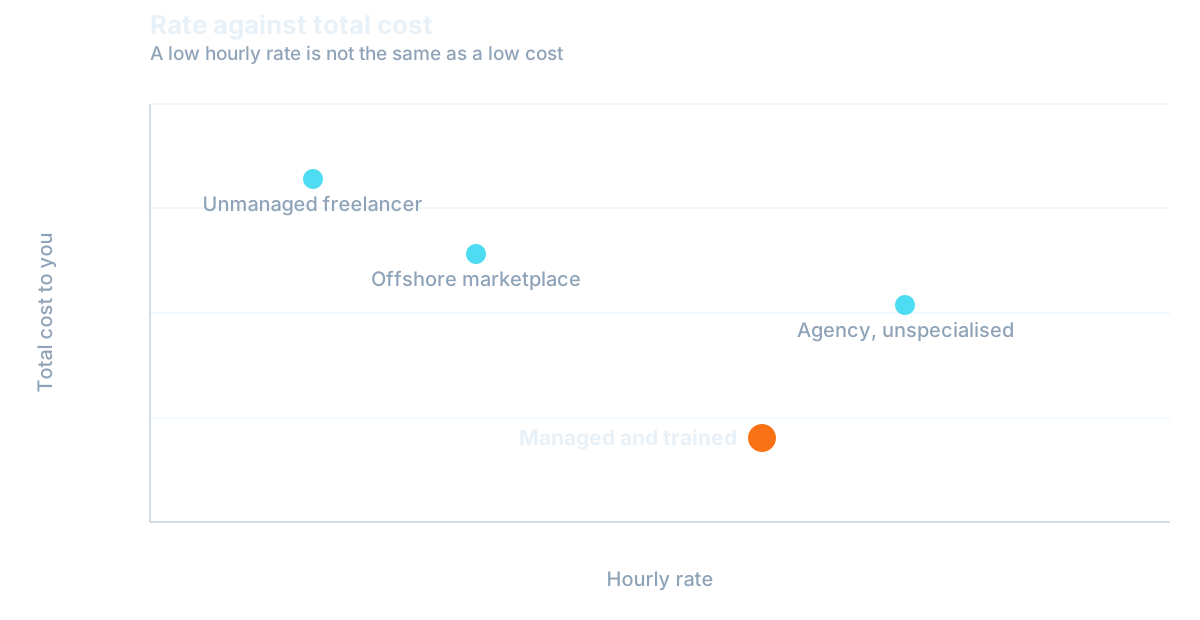
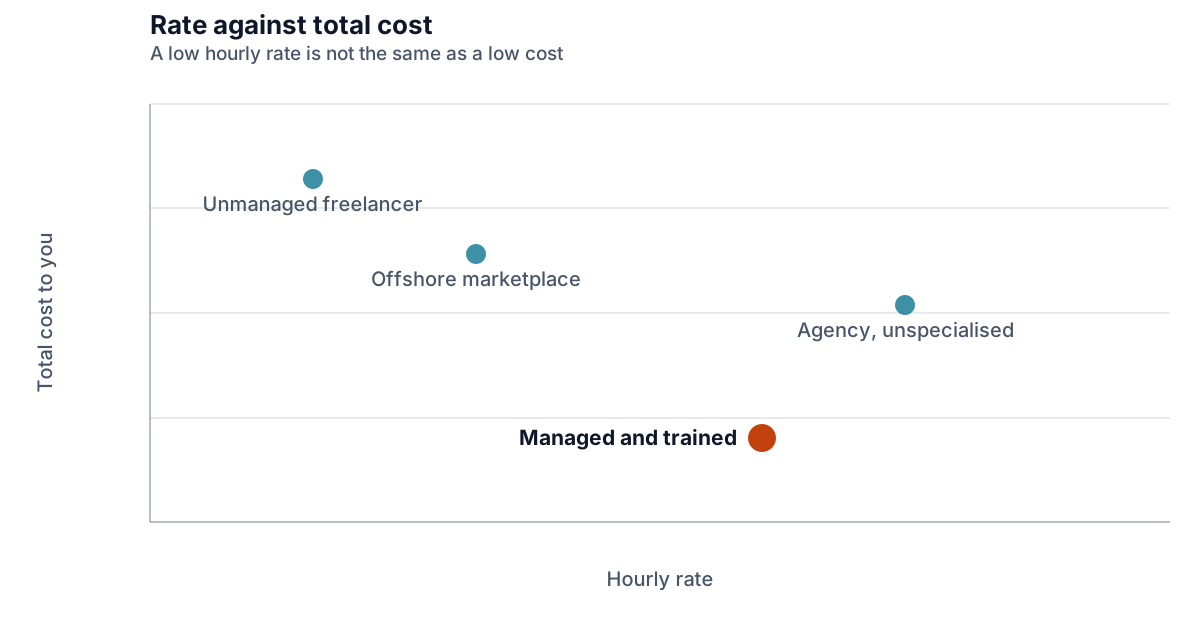
Very low rates are always achievable, and they are rarely the bargain they appear to be. The cost shows up somewhere else: in the hours you spend fixing output, in work that has to be redone, in turnover that resets your onboarding investment every few months, and in the errors that reach clients before they reach you.
The comparison worth running is total cost against delivered outcome, including your own time. An assistant at half the price who needs three hours of your week in supervision is not half the price. This is the single most common way owners conclude that virtual assistants do not work, when what did not work was the procurement.
How Virtual Assistant Pricing is Usually Structured
Three structures dominate, and each suits a different pattern of work. Hourly suits variable, unpredictable demand and gives you precise control at the cost of administration. A monthly retainer for a set number of hours suits steady operational work and is the most common shape for ongoing engagements. Dedicated full-time suits a role rather than a task list, and usually carries the best effective rate. A setup or placement fee alongside a recurring rate is normal in managed models, covering the sourcing and vetting that happen before day one.
| Structure | Fits | Watch for |
|---|---|---|
| Hourly | Variable, unpredictable demand | Administration overhead, and hours creeping without anyone deciding |
| Monthly retainer | Steady operational work | Unused hours you paid for, or scope quietly expanding past them |
| Dedicated full-time | A role rather than a task list | Committing before the work fills a week |
Each Pricing Model Fails in its Own Way
Knowing which failure you are exposed to is more useful than knowing the rate. Hourly drifts upward without a decision ever being made. Retainers are wasted in quiet months and silently overrun in busy ones. Full-time commits you to a shape of work you may not have confirmed. Review whichever you choose at the one-month mark, when you have evidence rather than an estimate. And remember that the cheapest rate and the cheapest total are frequently different providers, because setup fees, minimum hours, overage rates and replacement terms all move the annual figure.
How to Tell a Fair VA Quote from a Bad One
A quote you can evaluate states the scope, the hours, the coverage window, what happens when the assistant is unavailable, and what happens if the match fails. A quote that is only a number is an invitation to discover the terms later, usually at the worst moment.
Ask directly who replaces the person if they leave, how quickly, and at whose cost. Ask who is accountable if the standard of work slips. Providers who have solved those problems answer immediately and specifically, because they have had to. Vague answers are the signal to watch, far more reliable than price, and the same instinct drives the choice between a freelancer, a managed VA and an agency.
There is one more question worth asking, and it separates providers more sharply than any other: what does your vetting reject? A provider who has thought about quality can describe their funnel and the proportion that does not survive it, which is the heart of finding and vetting an assistant who lasts. You are buying the filter as much as the person, and the filter is the part you cannot inspect afterwards.
How to Budget for a Virtual Assistant
Budget against what the work is worth to you rather than against the cheapest available rate. If an assistant frees eight hours a week that you currently spend on admin, the relevant comparison is the value of those eight hours applied to selling, building or resting, not the rate itself.
Then hold a small buffer for the first month. Early engagements almost always surface undocumented process, and the fortnight spent writing things down properly is an investment that pays back across every subsequent hire. Teams that budget for that period treat it as setup; teams that do not tend to read it as the arrangement failing.
Want this handled for you?
We map the work eating your week and match a skilled specialist, typically in 7-14 days.