

How to Find and Vet a Virtual Assistant Who Lasts

Where do you Find a Virtual Assistant?
There are three routes, and they differ far more in what you have to do afterwards than in who you find. Open marketplaces give you the largest pool and the least filtering, so the work of screening, testing and reference-checking lands entirely on you. Referrals from other owners in your industry give you the highest signal and the smallest pool, and rarely arrive when you need them. A managed provider gives you a pre-vetted shortlist, at a price that reflects the screening you did not have to do, which is one reason the freelancer, managed VA and agency models price so differently.
None of these is the right answer in general. What decides it is how many hours you can spend on hiring this month, because a marketplace hire is cheaper only if your own time is free. Owners who skip that calculation tend to discover the cost later, when the third replacement is being onboarded.
Write the Scope before you Look at a Single Candidate
Most hiring failures are scoping failures wearing a talent costume. An owner who cannot describe the role precisely will interview against a vague impression, hire on rapport, and then be disappointed by work that was never specified. The candidate is rarely the problem in that story, which is why deciding what to delegate first comes before any advert.
Before you post or ask anyone, write down the five tasks that consume the most time, what finished looks like for each, which tools are involved, what decisions the person may make alone, and where they must stop and ask. That document is simultaneously your job advert, your interview script, your trial brief and your first week of onboarding, which is why writing it is the highest-return hour in the whole process.
What to Test for When Vetting a Virtual Assistant
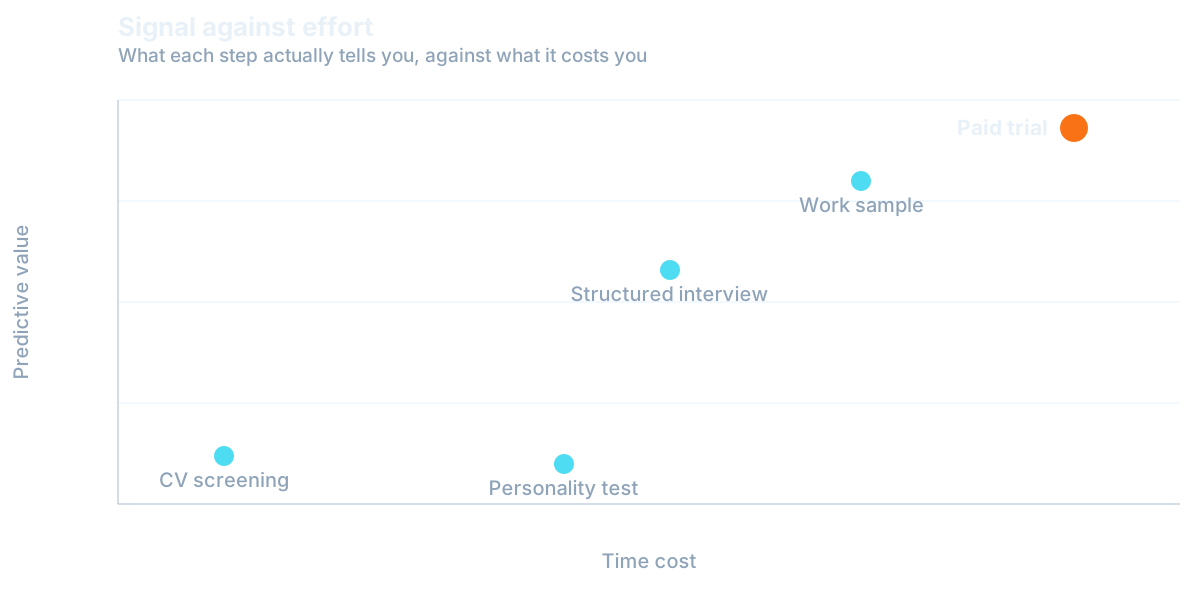
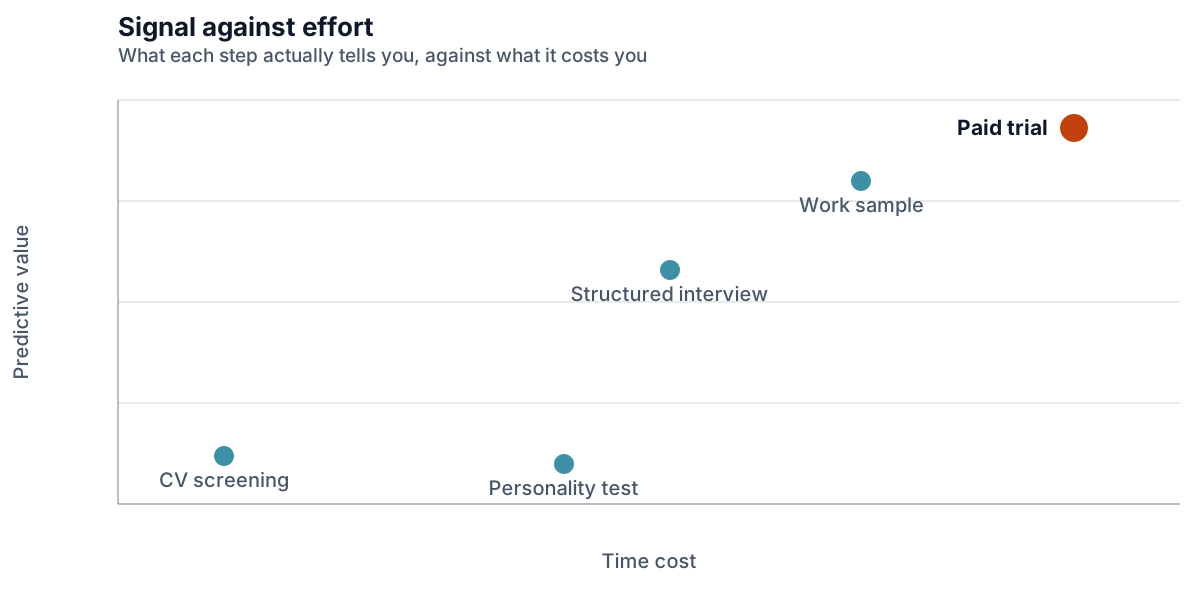
Interviews measure how well someone interviews. That is a real skill, and it is not the one you are buying. Testing beats interviewing for almost everything that matters, and the tests worth running are short, specific and drawn from the work itself rather than from a template.
Three things predict a lasting placement better than anything on a CV. Written communication, because remote work is mostly writing and ambiguity is expensive. Judgement under incomplete information, which you test by giving a task with something deliberately missing and seeing whether they ask or assume. And follow-through on something dull, because the work is largely dull and enthusiasm at interview tells you nothing about week nine.
What to skip: personality tests, which have almost no predictive validity for this kind of role and create false confidence; years of experience as a threshold rather than a signal; and long unpaid assignments, which mostly select for candidates with time rather than candidates with skill.
The Paid Trial is the only Reliable Signal
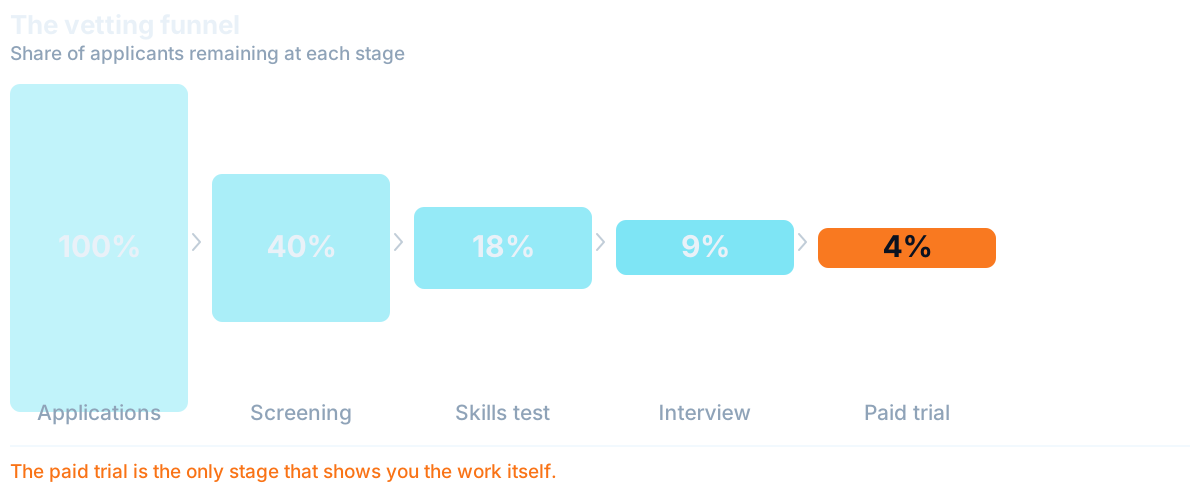
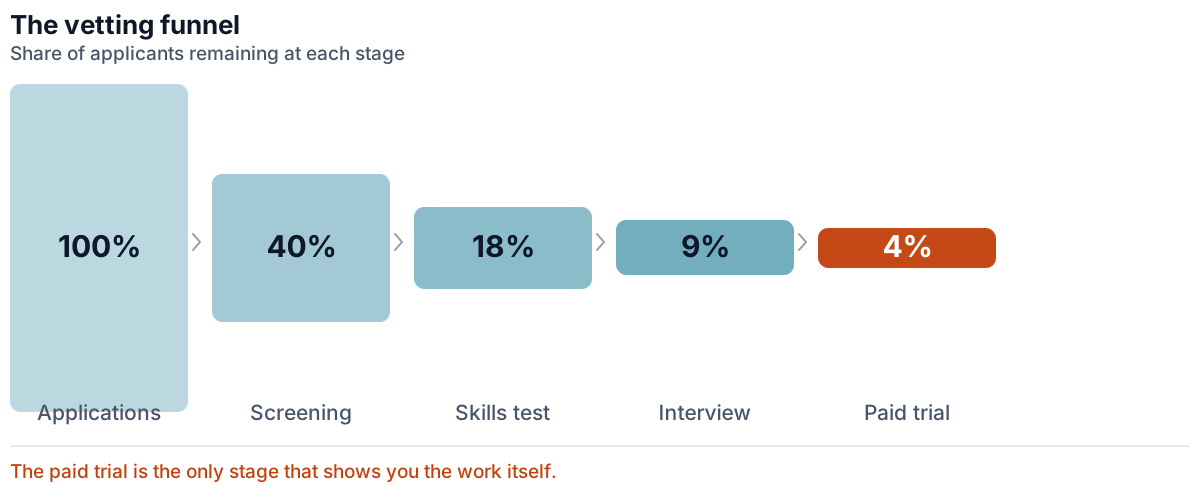
A short paid trial on real work tells you more than every interview combined. Pay for it, unpaid trials select against the candidates you want, and they set a tone you will regret. Two to five hours of real work, with the same context and access a real engagement would have, is usually enough.
Watch three things during it. Whether they ask clarifying questions before starting, which separates the careful from the confident. Whether the work comes back in the format you specified, which tells you about attention rather than ability. And how they handle the correction you give them, because you will be giving corrections for months and the response to the first one is highly predictive.
Give them the same access and context a real engagement would have, rather than a sanitised version, and set that up the safe way described in giving a virtual assistant access safely. A candidate working from a stripped-down brief cannot show you how they handle the ambiguity that defines the job, and you will have tested the wrong thing. Set the trial brief in writing, including what finished looks like and when you expect it.
Red Flags Worth Taking Seriously
Some warning signs are noise and some are disqualifying. The disqualifying ones cluster around communication and honesty rather than skill, because skill can be taught and the other two cannot.
- Vague answers about what they personally did on a previous engagement.
- Silence during the trial when something was clearly ambiguous.
- Reluctance to be paid for trial work, which often signals an agency reselling someone else.
- Availability that changes between conversations.
- Work returned in a different format than asked for, with no explanation.
Reference checks deserve a brief mention, because they are widely skipped and occasionally decisive. Ask a previous client one question: what did you have to keep doing yourself. The answer is far more informative than a general endorsement, and it surfaces the gap between what someone lists as a skill and what they actually carried unsupervised.
Why Good Virtual Assistants Leave, and How to Keep them?
Hiring well is only half the problem; the other half is that capable people leave engagements that are chaotic, and chaos usually means undocumented expectations rather than unpleasant behaviour. An assistant who cannot tell whether they are doing well, who receives feedback only when something goes wrong, and who is asked to guess at priorities will start looking elsewhere regardless of the rate. A structured first 90 days prevents most of it.
The retention fixes are unglamorous and cheap. A regular check-in that happens whether or not there is a problem. Written priorities so the person is not reverse-engineering your mood. Corrections given early and specifically rather than saved up. Most owners who cycle through three assistants in a year have a process problem that no fourth hire will solve.
Want this handled for you?
We map the work eating your week and match a skilled specialist, typically in 7-14 days.