

The First 90 Days With a Virtual Assistant

The First 90 Days with a Virtual Assistant: The Shape Nobody Warns you about
The first month with a new assistant costs you time rather than saving it. That is not a sign of a bad hire or a bad process. It is the unavoidable arithmetic of converting knowledge that lives in your head into instructions someone else can follow. Owners who are not told this in advance reliably conclude the arrangement is failing while it is working normally.
The useful frame is that you are paying a fixed setup cost once, in exchange for a return that compounds. Month one is investment. Month two is roughly break-even. Month three is where the arrangement starts producing what you hired it for. Knowing that shape in advance changes how you read the early weeks, which changes whether you stay the course long enough to get the return. If you are not yet sure you are at this point, check the signs you are ready for a virtual assistant first.
Days 1-30: Transfer Work, do not Train Broadly
The temptation in month one is to show the assistant everything, so they understand the whole business. Resist it. Broad context without concrete work produces someone who has heard a great deal and can do very little, and it spends the period when your attention is most available on the least useful thing.
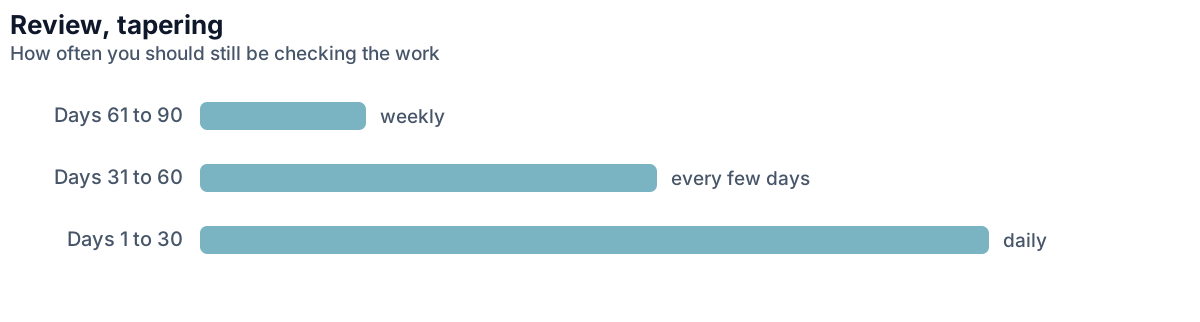
Pick two or three specific, repeatable, low-risk workflows and transfer those properly: inbox triage against defined rules, calendar coordination, a recurring report. For each one, walk through it once while they document it, let them run it with you reviewing every instance, then reduce to spot checks as the output stabilises. Choosing those first workflows well is the whole point of what to delegate first. By day thirty you want a small number of things off your desk, not a wide understanding of things still on it.
Expect questions, and expect a lot of them. A high question volume in month one is a good sign. It means they are surfacing ambiguity rather than guessing. Questions that stop too early usually mean someone has decided that asking looks incompetent, which is a far more expensive problem than the interruptions.


Days 31-60: Widen the Scope, Loosen the Review
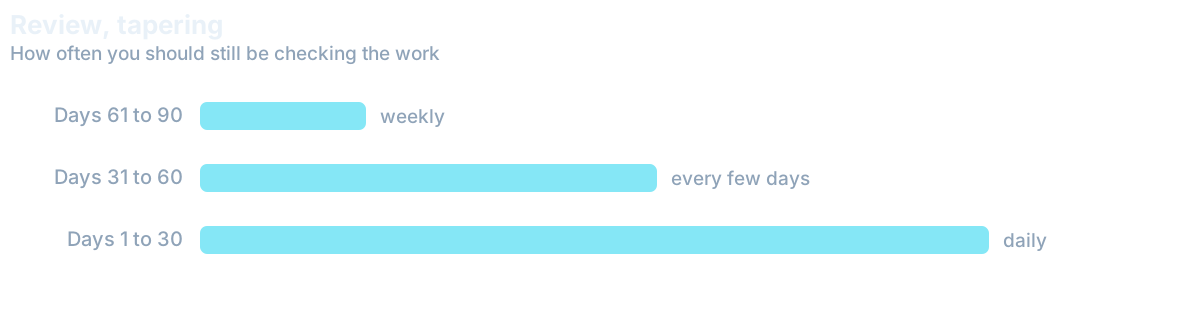
Month two is where the arrangement starts to pay. The first workflows should now be running without you checking each instance, which frees your attention to transfer the next layer, work that carries a little more consequence or needs more judgement.
This is also when to hand over anything client-facing, because by now they have seen enough of your voice and standards for it to sound right. Start with drafts you approve, move to sampled review, and be deliberate about it rather than letting the review step persist by default. An owner still approving every message in month three has not delegated the work; they have added a drafting step to their own calendar.
Watch for the specific failure of this period: scope that widens without documentation keeping up. It is easy to hand over five new things verbally in a busy week and then wonder in month four why they are inconsistent. Whatever you add, add it the same way: walk it once, let them write it into an SOP, review, release.
Days 61-90: The Shift from Tasks to Ownership
By month three the change should be qualitative rather than quantitative. The measure is whether whole categories of work have stopped reaching you at all, whether the question "has that been handled?" has become one you no longer ask.
This is the point to move from assigning tasks to assigning outcomes where the work supports it. "Keep the CRM accurate" rather than a list of records to update. "Make sure nobody waits more than two hours for a reply" rather than a queue to process. Outcome framing only works once the process is documented and trust is established, which is why it belongs in month three rather than month one.
It is also the right moment to ask them what is not working. Someone three months in has seen every rough edge in your process and has usually been too polite to raise it. Asking directly, and acting on one thing they mention, is the cheapest retention investment available. Keep a running list of the things you explain, and treat any item explained twice as a documentation task rather than a conversation.
Three Onboarding Checkpoints Worth Diarising
Put these in the calendar at the start rather than relying on noticing. Each one asks a different question, and having them scheduled prevents both drift and premature panic.
- Day 14. Are the first workflows transferring, and is the question volume healthy? Fix ambiguity now. This is a documentation review, not a performance review.
- Day 45. Are the first workflows running unsupervised, and what is the next layer? Expand scope deliberately, not by accident.
- Day 90. Which categories of work no longer reach you, what should move to outcome framing, and what have they noticed that you have not?
When it is not Working
All of the above assumes an arrangement that is on track, and sometimes one is not. The signals that matter are specific rather than atmospheric: the same correction given three or more times without the behaviour changing; work returning consistently in a different form than specified after the standard was documented; and a pattern of assurance that something is done when it is not.
Those are different from the ordinary friction of month one, and the distinction matters because acting on the wrong one is costly in both directions. Ambiguity that keeps producing the wrong output is a documentation problem and it is yours to fix. The same correction ignored repeatedly, after the standard is clear, is a fit problem. With a managed engagement, raising it early is far better than enduring it, because replacement is the provider's responsibility rather than a process you have to run again yourself.
Want this handled for you?
We map the work eating your week and match a skilled specialist, typically in 7-14 days.