

A Day With and Without a Virtual Assistant

A Day with and without a Virtual Assistant: Why One Day Tells the Story
Most cases for delegation are made in weekly or yearly terms: hours saved per month, capacity unlocked per quarter. Those numbers are easy to nod along to and impossible to feel. A single day is more useful, because what working without support costs you shows in the shape those hours take.
What follows is a composite rather than one client story: the pattern owners describe before and after, with the details removed. The point is that both days hold roughly the same amount of work and produce completely different outcomes. If you are still deciding whether the time is right, start with the signs you are ready for a virtual assistant.
A Day without a Virtual Assistant
It starts at seven with email, because email is the only thing you can do before anyone else is awake. Forty minutes in, most of it is triaged but nothing is finished, and three items now need something from someone else. Two of those will be forgotten by lunchtime.
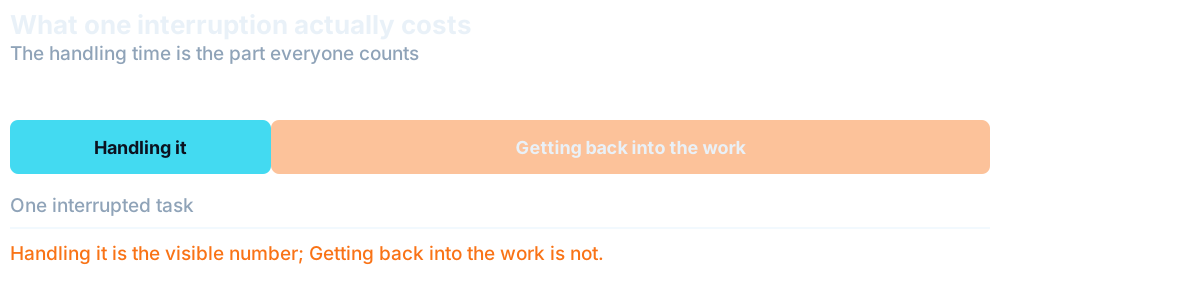
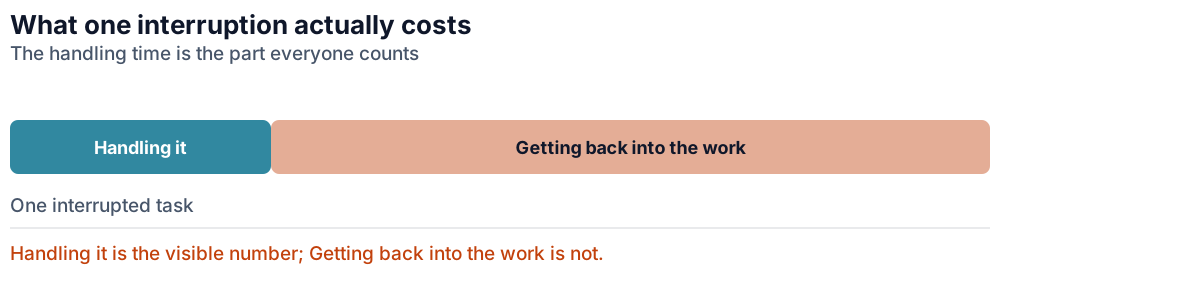
At nine there is real work: the proposal, the client call, the thing that earns money. It runs until the first interruption at nine-forty, when a supplier needs an answer. Handling it takes four minutes, and getting back into the proposal takes another eleven, which is the part nobody counts. That pattern repeats all morning: a scheduling clash, an invoice query, a question anyone with access to the file could have answered.
By two in the afternoon the proposal is half done and the day feels busy. Between two and five, three more interruptions arrive and one becomes a small crisis, because it was a small problem four days ago that nobody chased. At six the office empties and the real work finally gets a clear run, which is why the proposal is written between six and eight, and why today's follow-ups move to tomorrow, where they compete with tomorrow's interruptions.
A Day with a Virtual Assistant
It starts at eight, not seven, and the inbox is already sorted. The routine traffic is handled, four items are drafted and waiting for your approval, and two things are flagged as needing a decision. A good executive assistant runs this without being asked, so the morning starts with everything either done or clearly parked, and it took twelve minutes instead of forty.
Between nine and half past twelve the proposal gets written in one pass, because the supplier question went to someone who had the answer, the scheduling clash was resolved without reaching you, and the invoice query was handled by the person who raises invoices. The afternoon holds two client calls and a follow-up sequence that had been deferred for three weeks, which happens today because there is finally room for it. This is what it looks like to hand over your inbox without losing control.
The day ends at six, and the small problem from four days ago never becomes a crisis, because someone chased it on day one. That last part is the change owners notice first, and it never shows up in an hours-saved calculation.
Where a Virtual Assistant Saves you Time
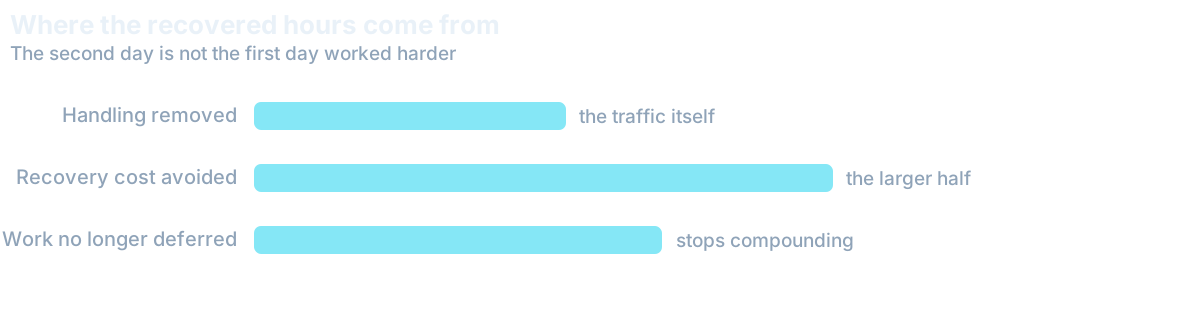
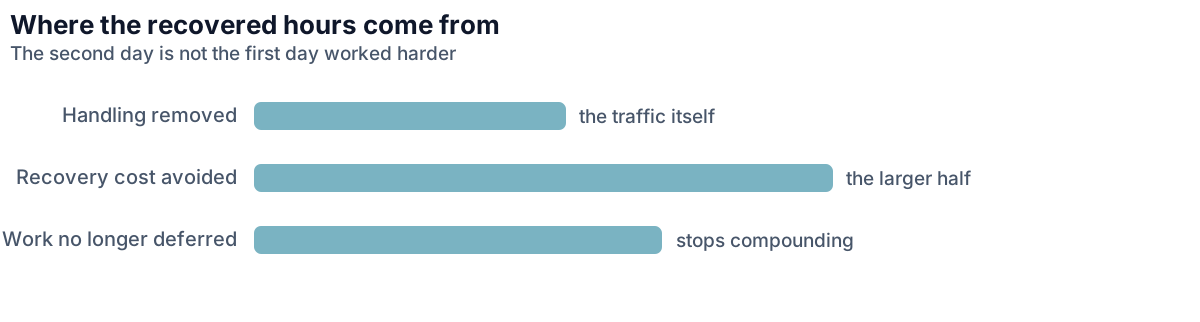
Add up the tasks removed from the first day and it is not a huge amount of time, perhaps ninety minutes of handling. Yet the second day fits in several hours more meaningful work. That looks like a contradiction until you count what interruptions cost beyond their length.
The Three Hidden Costs of Constant Interruptions
Three things happen at once. There is the recovery cost, where a four-minute question removes fifteen minutes because your attention has to be rebuilt. There is the deferral cost, where work that needs a clear run gets pushed to whenever one appears, usually the evening. And there is the decay cost, where things left unchased become worse versions of themselves: the invoice becomes a chase, the small maintenance issue becomes a repair, the quiet client becomes a lost one.
Only the first of those shows up in a time audit. The other two are why owners say delegation changed their week far more than the raw hours suggest it should have.
Why Month One Costs Time before it Saves it?
The second day is not available in week one, and anyone selling it that way is misleading you. The first fortnight looks worse than the first day, because you are answering questions, correcting work and writing down process that has lived in your head for years. Owners who are not warned conclude the arrangement is failing while it is working normally. Our 30-60-90 day plan for a new virtual assistant shows what each stage should look like.
The turn usually comes somewhere in the second month, and it arrives unevenly: the inbox settles first, then the routine coordination, then anything client-facing. What you buy in those early weeks is your own knowledge turned into something another person can run, and that has a fixed cost you pay once.
The Caveat: Tasks Delegate, Decisions do not
This comparison assumes the interruptions in the first day could be handed off, and for many owners a good share of them cannot. A day full of decisions rather than tasks looks identical from the outside and does not improve with an assistant, because decisions do not transfer. Only the preparation around them does.
Before assuming your day is the first one, spend a week marking each interruption as either execution or decision. If most are execution, the second day is available to you and the only question is when. If most are decisions, your constraint is elsewhere, and hiring will add a person waiting on you rather than removing the interruptions. That is also the heart of what to delegate first.
Want this handled for you?
We map the work eating your week and match a skilled specialist, typically in 7-14 days.