

Property Management Virtual Assistants: What They Handle

What does a Property Management Virtual Assistant do?
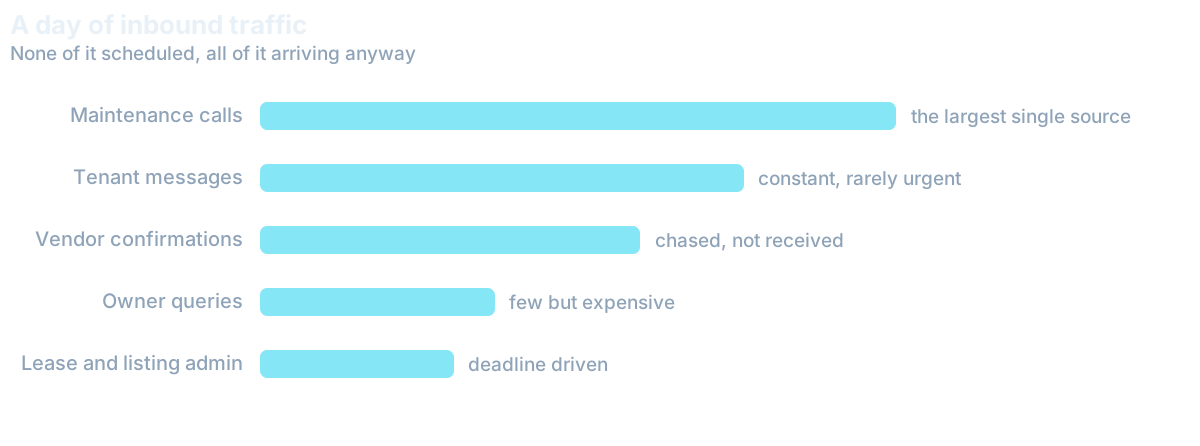
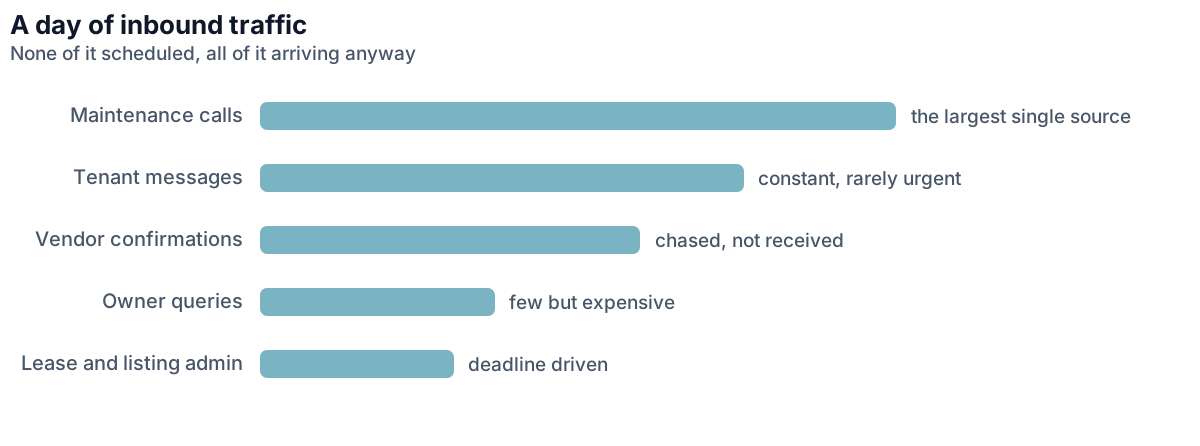
A property management virtual assistant runs the administrative and communication layer of a rental portfolio: tenant messages, maintenance tickets, rent follow-up, lease paperwork, vendor scheduling, listing updates and owner reporting. They do not make ownership decisions and they do not perform work that requires a licence. What they take over is the constant, interruption-driven traffic that arrives whether or not you have time for it: which is why the role tends to pay for itself long before it looks impressive on an org chart.
The distinction worth holding on to is between judgement and follow-through. Deciding whether to renew a difficult tenant is judgement. Sending the renewal notice on the right date, logging the response, chasing the signature and updating the ledger is follow-through. Most managers are drowning in the second category while telling themselves they are busy with the first.
Maintenance Coordination is the Real Job
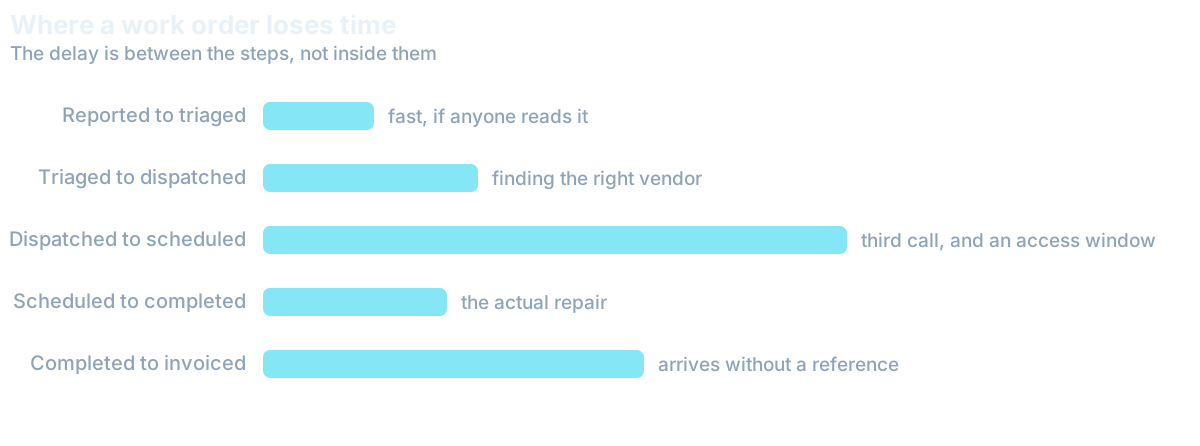
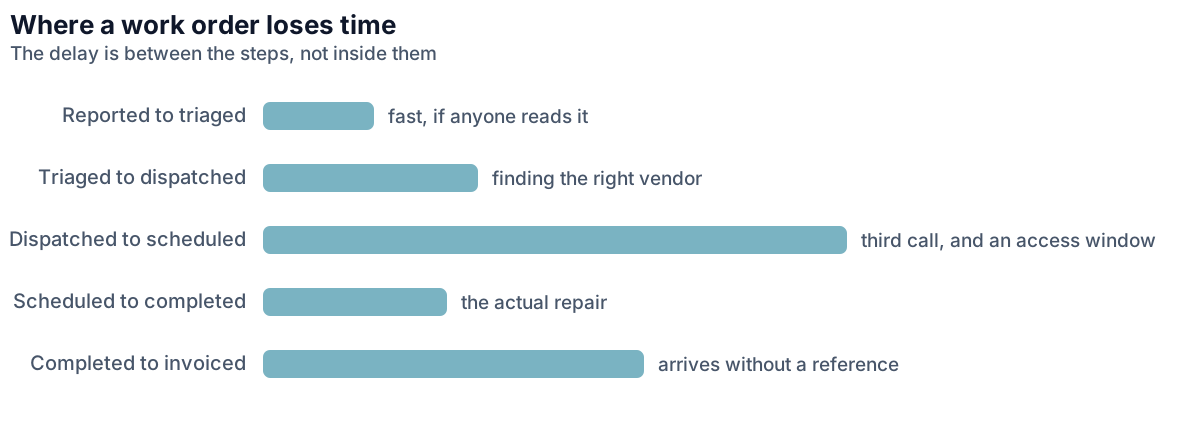
Ask any manager which task consumes their week and the answer is usually maintenance coordination, rarely leasing. A single work order can involve a tenant describing the problem badly, a vendor who answers on the third call, an access window that has to suit both, an invoice that arrives without a property reference, and an owner who wants to know why it cost what it cost. Multiply that by a portfolio and you have a full-time role hiding inside somebody else's calendar.
This is the work a trained assistant absorbs most cleanly, because almost all of it is documented process rather than discretion. They triage the ticket, apply your approval threshold, dispatch from your approved vendor list, confirm access with the tenant, chase completion, collect the invoice with the property coded correctly, and close the loop in the system. The manager only appears when something crosses a limit you set in advance.
Time-to-Dispatch Beats Cost per Repair
The measurable effect is usually on time-to-dispatch rather than cost per repair. Work orders that used to sit until somebody had a free hour get moved the same morning, which matters because small maintenance problems become expensive ones mostly through delay.
What should Never Leave your Desk?
Delegation fails most often because the boundary was never drawn. Some decisions carry legal, financial or relationship consequences that belong to a licensed or accountable person, and handing them over informally creates exposure that no amount of efficiency justifies. Write the boundary down before the first week, not after the first incident.
In practice the line sits at anything that binds the owner or the tenant. Approving an expense above your threshold, accepting or rejecting an application, signing or terminating a lease, initiating eviction proceedings, negotiating terms, or advising a tenant on their rights are all yours. Everything upstream of those moments, gathering, verifying, scheduling, documenting and following up, is delegable, and delegating it well is what makes the decisions themselves faster.
VA, In-House Coordinator, or Full Management Company
These three options are frequently compared as if they were the same purchase at different prices, which they are not. A management company takes the portfolio off you entirely and prices accordingly. An in-house coordinator gives you direct control and fixed overhead. A virtual assistant gives you capacity without headcount, provided you already have a process for them to run.
| You do it | In-house coordinator | Property management VA | Management company | |
|---|---|---|---|---|
| Cost model | Unpaid hours | Salary, tax, benefits, desk | Setup fee plus monthly service fee | Percentage of collected rent |
| Works well at | Under roughly 10 units | Large, stable portfolios | Growing or variable portfolios | Owners who want no involvement |
| You keep control of | Everything | Everything | Every decision, not the admin | Very little day to day |
| Ramp time | None | Hiring cycle, then training | Days, if they arrive trained | Weeks of transition |
| Main risk | Nothing gets chased | Fixed cost through quiet months | Weak process gets exposed fast | Owner loses tenant relationship |
The caveat sits in the last row. A virtual assistant amplifies whatever system you already have, so if approvals, vendors and escalation paths only exist in your head, the first fortnight will feel worse rather than better. That is a reason to write the process down before you hand it over.
What does a Property Management VA Cost?
Pricing follows scope rather than unit count, because a hundred stable single-family doors can generate less traffic than thirty units mid-renovation. The variables that move the number are how many properties generate inbound messages, whether you need coverage across time zones, how much of the work is reporting versus live coordination, and how documented your process already is.
The useful comparison sets the assistant's rate against the cost of the things that currently slip. A vacancy extended by a fortnight because the listing was not refreshed, a repair that escalated while a ticket sat unread, a renewal missed because nobody sent the notice. Those are the numbers this role is measured against, and they are usually larger than the invoice.
Tools they should Already Know
Ask about tooling in the interview, but weigh it lightly. Somebody who has coordinated maintenance in one platform learns another in days, whereas somebody who has never handled an angry tenant at half past four on a Friday does not learn that from documentation. Fluency in your stack is convenient; judgement under pressure is what you are buying.
- AppFolio
- Buildium
- Propertyware
- Rent Manager
- TenantCloud
- DoorLoop
- Google Workspace
Signs you are Past the Threshold
Most managers hire roughly a year later than they should, because the workload arrives gradually and each individual message feels too small to justify help. The signal to watch is whether administrative traffic has started displacing the work that grows the business, whatever the portfolio size.
- Maintenance requests routinely wait a day before anyone reads them
- You answer tenant messages in the evening because the day was full
- Renewal notices have gone out late, or nearly late, in the last quarter
- You have stopped chasing new owners because there is no room in the week
- You could not say, without checking, which work orders are open right now
How to Onboard One without Losing a Month
Onboarding fails when it starts with access rather than with scope. Give somebody your software logins on day one and you have created a second person waiting to be told what to do; define the first three workflows and the approval thresholds first, and they can be useful before the end of the opening week.
Start narrow. Hand over maintenance intake alone, with a written approval limit and a named escalation route, and let it run for a fortnight until you stop checking every ticket. Then add tenant communication, then rent follow-up, then owner reporting. Each addition should only happen once the previous one has gone quiet, because a quiet workflow is the only real evidence that the process transferred rather than the tasks.
Expect the first month to surface gaps in your own documentation rather than in the assistant's ability. That discomfort is the point: the same ambiguity was already costing you time, it was invisible while the work lived in one person's memory.
Want this handled for you?
We map the work eating your week and match a skilled specialist, typically in 7-14 days.